measured
RAM
Total, available, used. Source: local process measurement.
Scan system
Scan System & Set Limits is a local resource scan. It projects RAM, disk, CPU, and model budget into admission. It does not phone home. It does not invent VRAM.
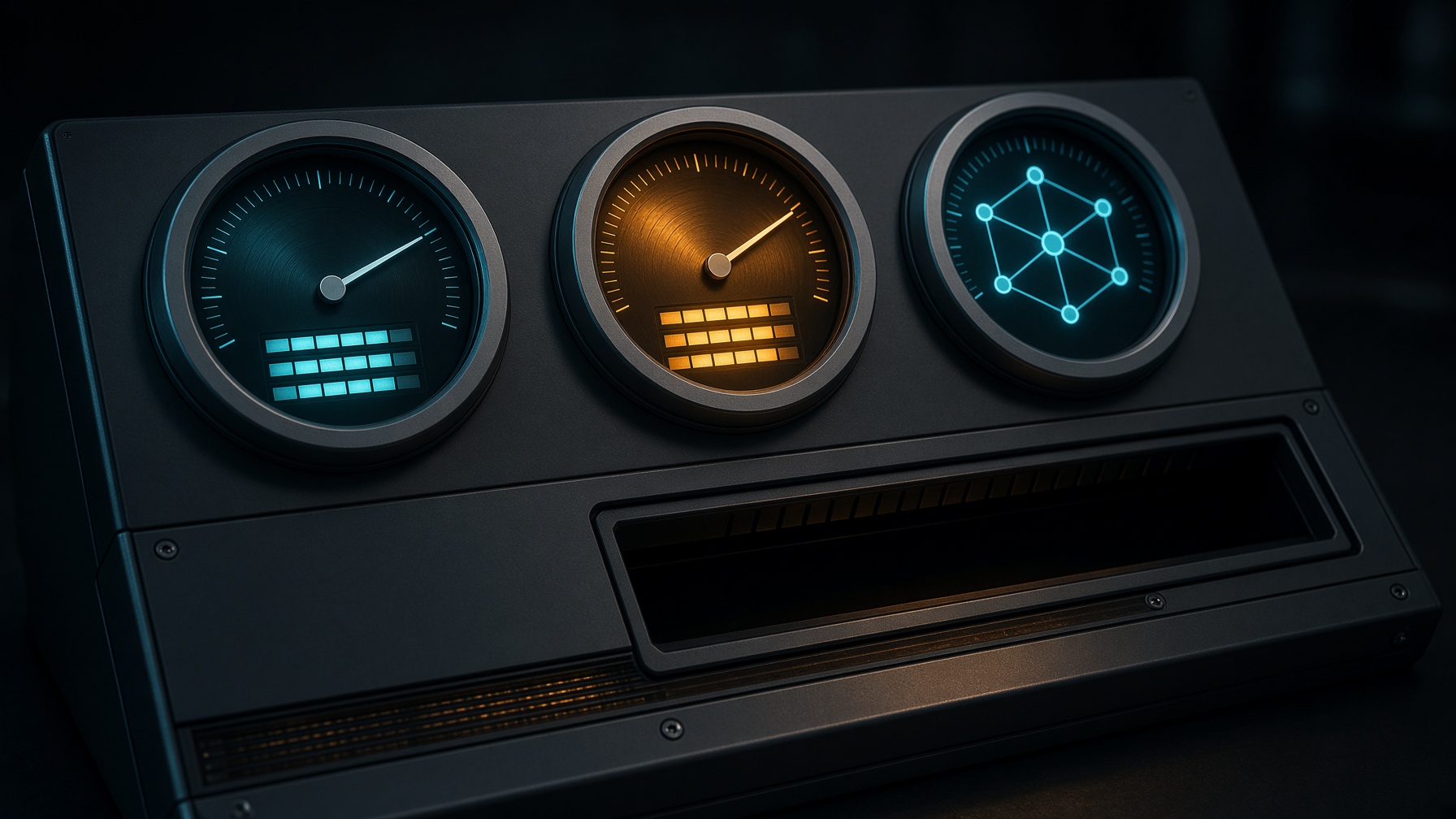
Local only
RAM, disk, CPU topology are measured. Accelerators and temperatures stay unavailable on the primary control so the button cannot hang on vendor sensors.
Measured
measured
Total, available, used. Source: local process measurement.
measured
System volume total and free. Models disk is projected when known.
measured
Physical cores, logical threads, thread profile.
measured
Local provider inventory when the provider is reachable.
Unavailable on purpose
unavailable
Not in the primary Scan System control. Status stays unavailable unless a later diagnostic measures them.
unavailable
Vendor sensors are not on the primary scan path.
Then the hub uses it
Related actions
Scan System & Set LimitsOne local resource scan. Projects RAM, disk, CPU, and model budget into admission. No network egress. Download-only is not running.Scan Open ModelsRefresh the open-source catalog. This path opens the network to the public library after explicit consent. It is not the local system scan.Start MoA CycleRun a Mixture of Agents cycle on bound spokes. Live MoA is experimental. Demo MoA is simulated and stays labeled.
One local resource scan. Projects RAM, disk, CPU, and model budget into admission. No network egress. Download-only is not running.
Refresh the open-source catalog. This path opens the network to the public library after explicit consent. It is not the local system scan.
Run a Mixture of Agents cycle on bound spokes. Live MoA is experimental. Demo MoA is simulated and stays labeled.
Model hierarchyOpen-source catalog. Fit before load. Download-only is not running.Hardware honestyflywheel_owns_hardware = false. Complementary ≠ certified. STDP is never a permission.Scan this browserThis-tab probe: deviceMemory, cores, storage estimate, WebGL renderer. This-tab probe ≠ Hub scan.
How it connects
Admission is a waterfall. A name in the catalog is not a live spoke.
First refuse wins
live-bound
04aBind spokeruntime attachmentunavailable
04bRefusedownload-only stays soAccelerators stay unavailable on the primary scan unless a later diagnostic measures them. Occupancy never invents a fourth lamp.